
Styling · · 1 min read
The Art of the Still Life
A few objects, grouped well, say more than a shelf full. Here is how we arrange ours.
Every home has a surface that collects things: keys on the console, a stack of post, the candle that never quite found its place. A still life is simply a decision about that surface — choosing a few pieces and giving them a reason to be together.
Begin with a base
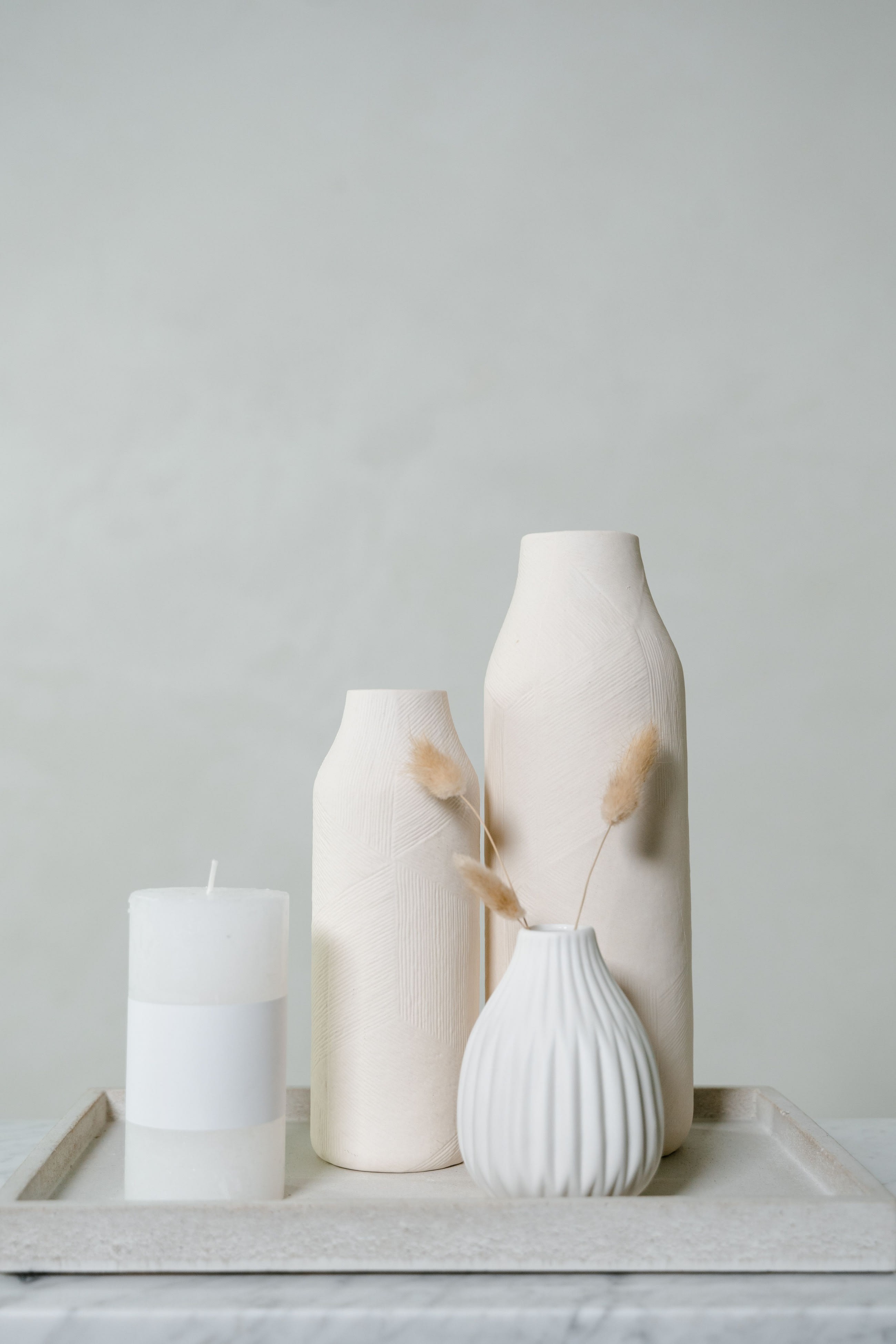
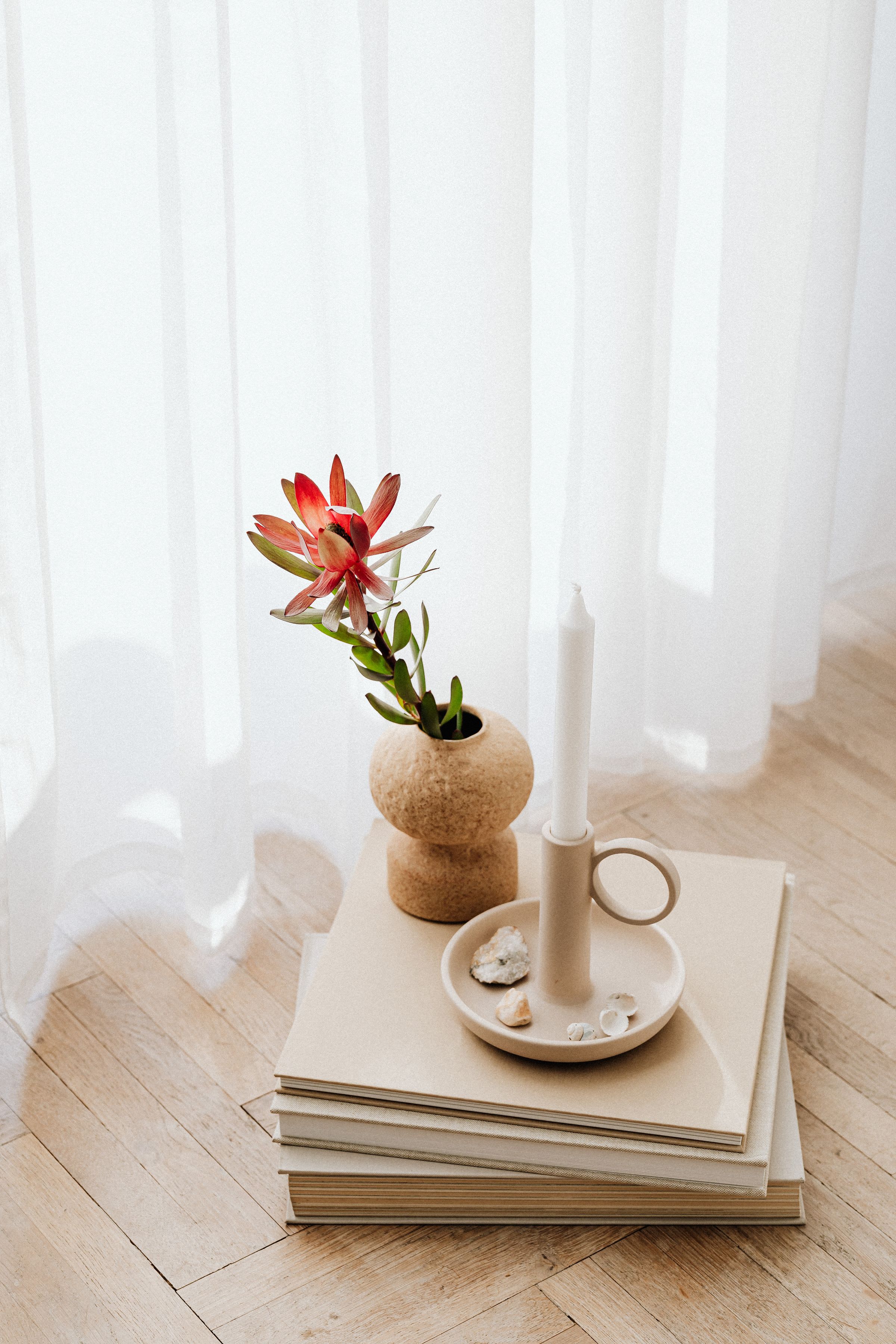
A tray, a low stack of books or a wooden board turns a scattered group into a single composition. It draws an edge around the arrangement and tells the eye where to look. Stone and wood work especially well, because they add weight without adding colour.
Vary the height, repeat the material
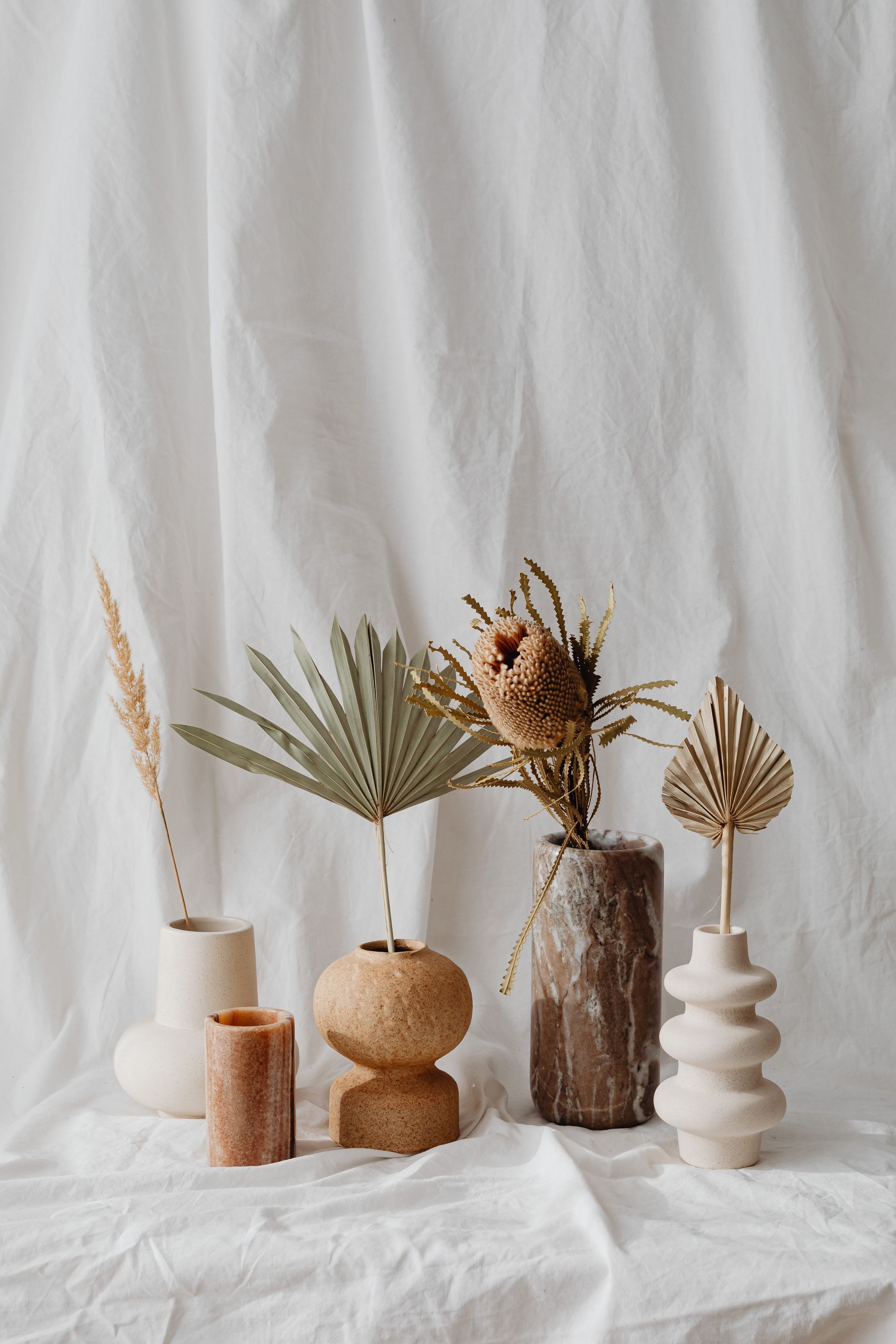
We work in odd numbers — usually three, sometimes five — and give each piece a different height: one tall, one medium, one low. Then we repeat something across the group, whether that is a material, a finish or a colour, so the pieces feel related rather than collected.
Leave room to breathe
The space around an arrangement matters as much as the objects in it. If a surface feels busy, take one thing away and look again. Usually the arrangement gets better, not emptier.
Choose fewer things, and give each one a little more room.
Let it change with the seasons
A still life doesn't have to be permanent. Swap a fresh stem for a dried one in autumn, or bring a candle forward for the darker evenings. Small edits keep a familiar corner feeling new.